Ontology definition and mappings: the Octostar Fusion Centre
The Ontology (also known as Data Model) is the key for Octostar to operate.
All the records (also known as entities) loaded or created within Octostar will fit into one (or more) of the ontology concepts.
The Octostar Standard Investigative Ontology (OSIO).
Octostar typically comes with the Octostar Standard Investigative Ontology (OSIO) - this contains typical concepts useful in general law enforcement, national security, and (to some extent) financial crimes. However, this ontology can be changed (by removing or adding new concepts, properties), or a new ontology can be created altogether.
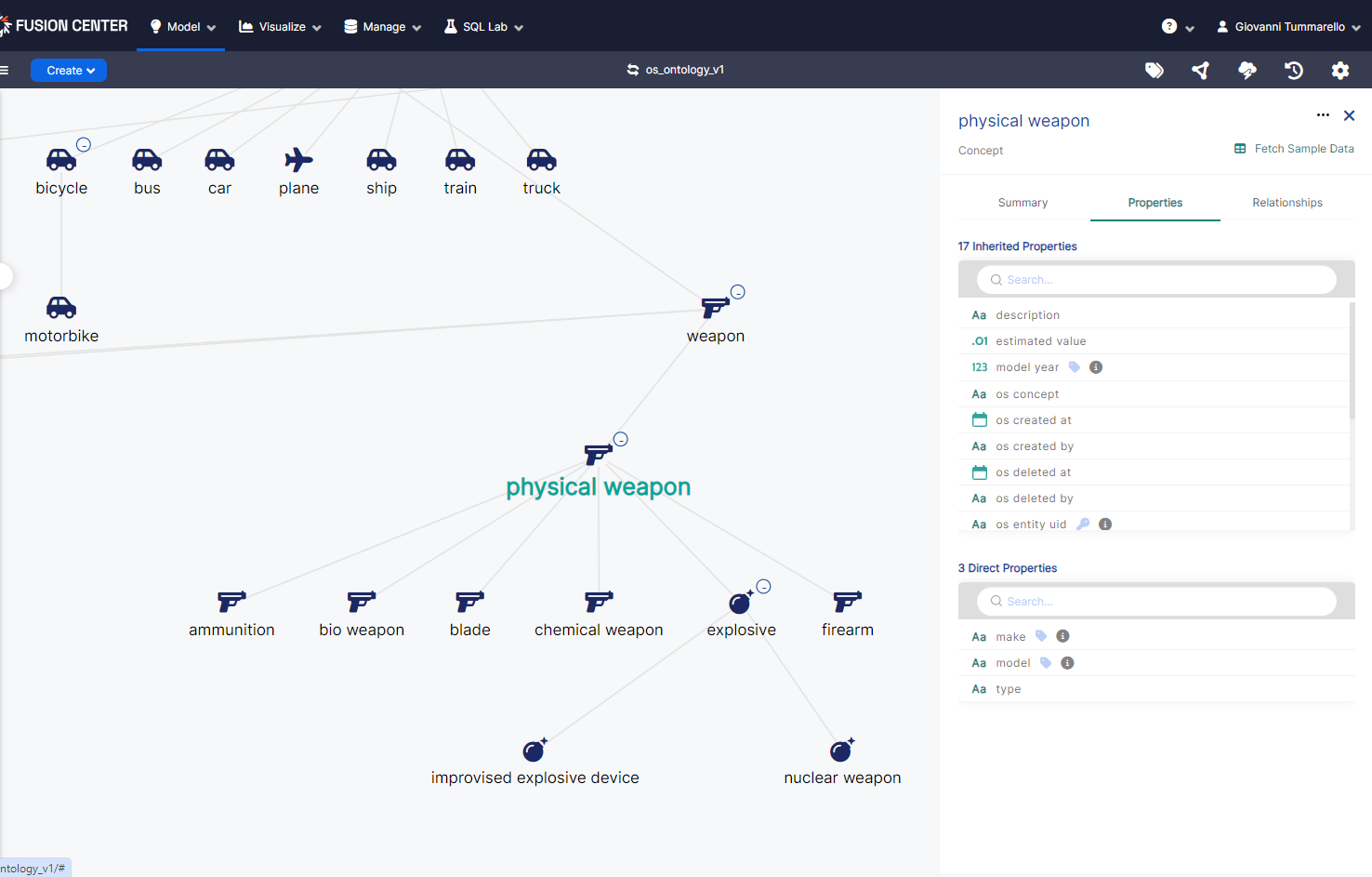
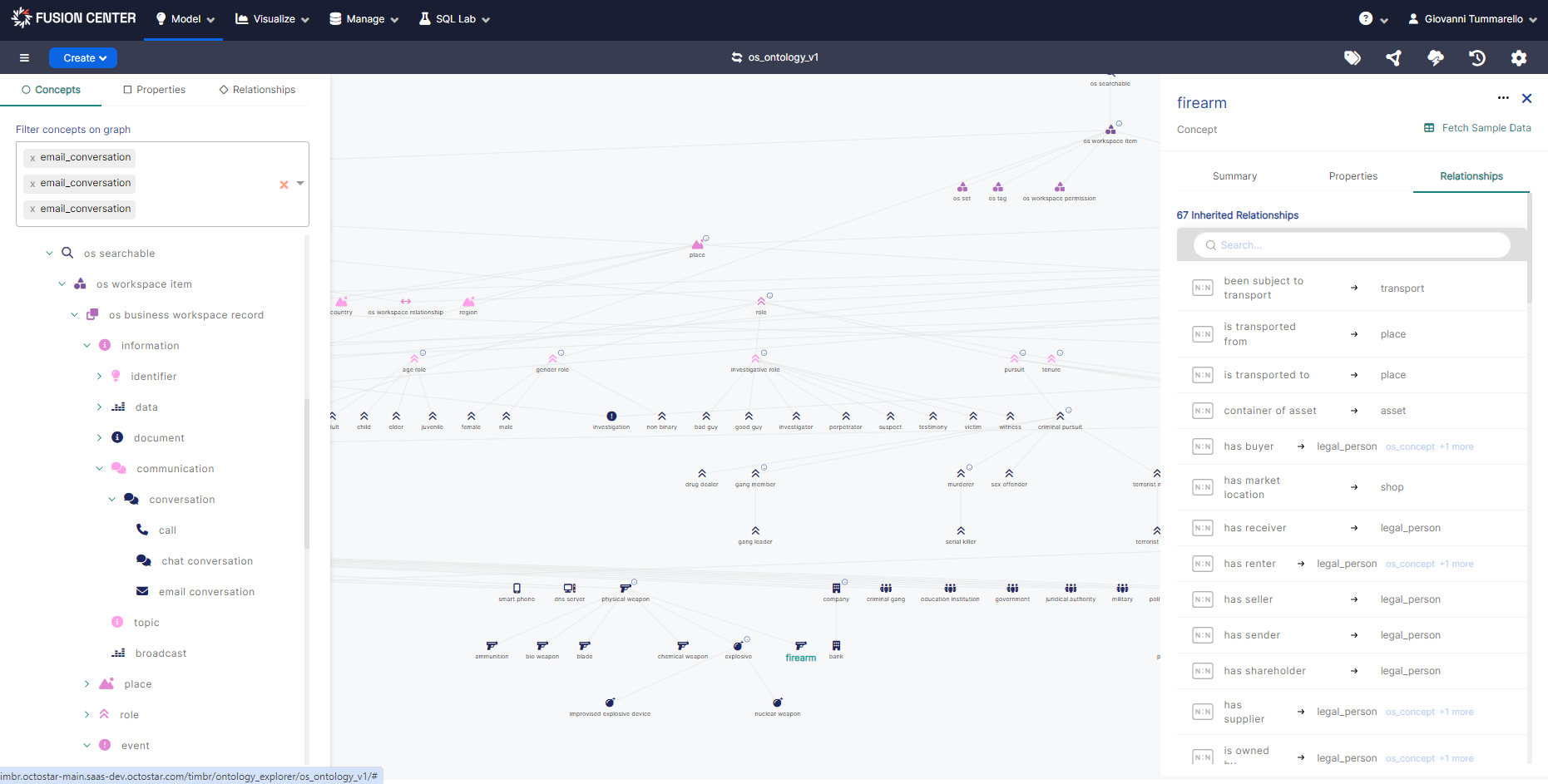
Aside from naming Concepts (e.g. Vehicle, Person), the Ontology defines:
- properties: these are attributes of the Concepts (E.g. Date of Birth)
- relationships: these are the possible relationships between Concepts (E.g. Person spouse_of Person). Relationships don't only have a name but can also have attributes themselves.
The Octostar Fusion Center is where:
- The data models (ontologies) are created and modified
- Live data sources are mapped (E.g. a new database table, mapped to the concept person) giving access to remote data
- Security is managed, with respect to data sources (not individual workspaces)
- Other administrative functions such as logging, auditing, performance monitoring and others.
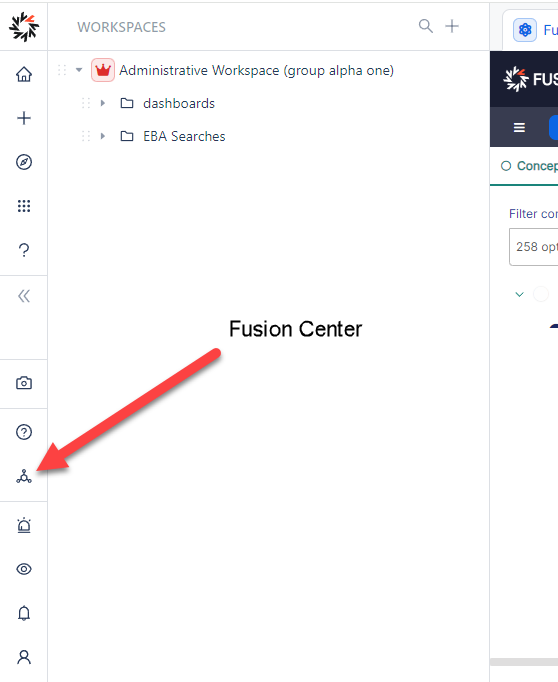
The Octostar Fusion center can be accessed from the UI using this icon.
The Octostar Fusion center (also known as Timbr) has a full documentation (see top level of this guide) which is key to learn to:
- Create and properly manage ontologies
- Connect Concepts to Database tables (e.g. Oracle, Mysql, Clickhouse) so that the table rows become "entities" and can be visualized and investigated in Octostar
- Handle the security and access control aspects - who can see which data
The Octostar Base Ontology
The Octostar Standard Investigative Ontology (OSIO) is in reality composed of 2 parts:
- the base ontology: this base ontology is a set of octostar-reserved entities necessary for the platform to work correctly. These entities are prepended with the
os_prefix and so do their attributes. These should never be changed or customized by the end user. - The other domain concepts (also known as as the business part) - these are "mounted" on top of the base ontology (which means these concepts inherit from some of the base classes).
Note: if one wanted to create a new ontology from scratch, one should always anyway derive the concepts from the base ontology
All items in Octostar Standard Investigative Ontology (but in general of any other business ontology) must then inherit from the os_business_workspace_record concept, so that it has the fields required from security and normal Octostar Operations.
Note that in general one could have other concepts in the ontology which do not derive from these but in this case they would not be able to be "stored" (appear to be stored) within specific investigations - since the os_workspace field is key for this.
How to make changes to the ontology (and not break the existing deployment)
Whenever the Ontology is modified with respect to a os_business_workspace_record (therefore a part of the ontology that can be created and stored within a workspace), the underlying database must be updated to reflect the changes.
This is the case for example if one wanted to add a more specific concept for Person (e.g. a Police Officer) or add/modify a field to any of these.
Please see this document whenever you want to make changes to the ontology: A Guide to (Careful) Ontology Changes